If there ever was a place on the planet where you could play golf like a lord and pay like a knave, it would be Pakistan.
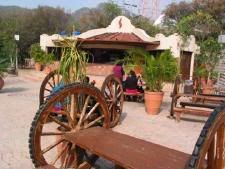
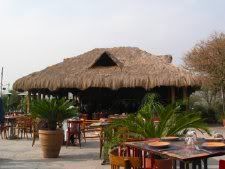
(Royal Palm Golf Club, Lahore, Pakistan)
Pakistan is the most well kept secret golfing destination as it has some of the most spectacular courses that are open year round. The alluvial soil of the Punjab plains coupled with the Himalayan backdrop provides a natural ecosystem for an interesting golf course layout. Pakistanis are also naturally talented as golfers as they on the average tend to have very good fine motor control and an Asian mindset that marries competitiveness with a balanced inner calm. The fine motor control and good hand eye coordination has been shown by Pakistani athletes in the fields of squash, field hockey, cricket(yikes) and badminton.
Golf came to Pakistan generally as a result of foreign presence. My first experience on a golf course was at the Peshawar golf course that was built on a dried lake bed. The first nine holes are one of the greenest in Pakistan. Pakistan Air Force Commanders got the golf bug and provided the support to make golf one of the sports they adopted along with squash. My parents got into the game at Risalpur Air Force Base in the early 60s. An old World War II base was converted into a the golf course. The runway became the fairway for a couple of holes. The old air traffic control tower was converted into the club house.
Pakistani golf courses tend to have indigenous grass that is is quite hardy and can withstand hot temperatures. The blades tend to grow horizontally and don’t need much of watering. Most of the courses are only sparsely watered, and as a result have a harder surface when compared to those in the US. As a result of grass type and limited watering, the golf swing that works is a shallower one that does not require a divot. Picking the ball clean and letting it run after it drops is the typical way most Pakistanis learn to play.
Trapping the ball is a challenge due to the harder surface and therefore difficult to spin the ball. The greens tend to be well maintained but are generally slower than those in the US. Most Pakistani golf courses are private and tend to fall into three categories.
First category are the old golf courses like Rawal Pindi, Lahore Gymkhana, Peshawar Golf Course, Islamabad Golf Course etc. They are generally well maintained and have old trees and a lot of character. The Rawal Pindi Golf course is the oldest golf course. It was completed in 1926. The facility was initially developed as a nine-hole course. After several phases of development, it is now a 27-hole course. The clubhouse is perched on a hill, from where there is a panoramic view of the twin cities of Islamabad and Rawalpindi. The foothills of Himalayas provide the backdrop.
The second category are courses maintained by Pakistani Armed Forces and government entities like Railways etc. They tend to be relatively new and not open to general membership. Their quality varies from place to place. If you can get in , the cost of playing is minimal. The third category are the premier golf courses like Royal Palm in Lahore and Arabian Sea Country Club in Karachi. They are world class courses that have manicured fairways and greens; and are from a Pakistani perspective quite costly to join and play. Pakistan Open joined the Asian PGA tour at Arabian Sea Course in 2006.
Then there are some golf courses in exotic places like Bhurban in the Himalayas. It is a nine hole course adjacent to a luxury hotel situated in and around a saddle hill between to mountains. One par three hole that requires extreme focus as the there is a deep ravine between the tee and the green with swirling winds.
On the average Pakistanis tend to play regularly. The caddies are common, as they are inexpensive to get. Not many courses have golf carts. This actually results in less wear and tear of the fairways given the heavy use they get, even though most are private courses. Many of the caddies are scratch players and can guide visitors like me about the local conditions. In many courses there are even “agay walaas”. They are the ball boys walking ahead to keep an eye on an errant ball.
There are many reasons inhibiting Pakistani players fromreaching the top in world golf:
There are no structured and quality golf schools.
Because most courses are private, the cost of joining is prohibitive from the Pakistani perspective.
Those who can overcome these hurdles are mostly constrained to playing in conditions that are relatively tame from the world standard.
The length of the courses tend to be on the shorter side.
The Himalayas create such barrier to winds that the South Asian sub continent does not have windy playing conditions that are common elsewhere.
The golf courses tend not to have elevation changes of contoured fairways with sloping lies, as that would be difficult to irrigate and maintain in the hot season.
These relatively tame conditions don’t challenge Pakistani players to prepare for much tougher conditions when they go abroad.
To get a feel for what comparable golf outings would cost in Pakistan and US, let us compare Rawal Pindi Golf Club and Royal Palm of Lahore with Stow Acres North Course in Massachusetts USA:
At the semi-private Rawalpindi Golf Club the Green Fees are the equivalent of US$4 and the Caddy Fee is US$3.
At the private Royal Palm in Lahore, the Green Fees are US$25 (as guest) and Caddy Fee is US$3.
At the public Stow Acres in USA the Green Fees are US$60 and the Cart Fee is US$18.
As it turns out Pakistani industry produces many golf supplies leveraging their textile and leather base. Pakistani T-shirts, caps, towels, trousers, gloves, bags and head covers are sold world wide under different brand names.
The number of golf courses are on the increase with the increasing middle class. Most of the new golf courses are being built with the higher end housing developments. There needs to be a concerted effort to create public courses, as this would allow the public to play golf. This would provide a healthy outlet where not many currently exist. Golf has now also been included in Olympics and offers amateurs a chance for fame and fortune.
(Royal Palm Golf Club, Lahore, Pakistan)
Pakistan is the most well kept secret golfing destination as it has some of the most spectacular courses that are open year round. The alluvial soil of the Punjab plains coupled with the Himalayan backdrop provides a natural ecosystem for an interesting golf course layout. Pakistanis are also naturally talented as golfers as they on the average tend to have very good fine motor control and an Asian mindset that marries competitiveness with a balanced inner calm. The fine motor control and good hand eye coordination has been shown by Pakistani athletes in the fields of squash, field hockey, cricket(yikes) and badminton.
Golf came to Pakistan generally as a result of foreign presence. My first experience on a golf course was at the Peshawar golf course that was built on a dried lake bed. The first nine holes are one of the greenest in Pakistan. Pakistan Air Force Commanders got the golf bug and provided the support to make golf one of the sports they adopted along with squash. My parents got into the game at Risalpur Air Force Base in the early 60s. An old World War II base was converted into a the golf course. The runway became the fairway for a couple of holes. The old air traffic control tower was converted into the club house.
Pakistani golf courses tend to have indigenous grass that is is quite hardy and can withstand hot temperatures. The blades tend to grow horizontally and don’t need much of watering. Most of the courses are only sparsely watered, and as a result have a harder surface when compared to those in the US. As a result of grass type and limited watering, the golf swing that works is a shallower one that does not require a divot. Picking the ball clean and letting it run after it drops is the typical way most Pakistanis learn to play.
Trapping the ball is a challenge due to the harder surface and therefore difficult to spin the ball. The greens tend to be well maintained but are generally slower than those in the US. Most Pakistani golf courses are private and tend to fall into three categories.
First category are the old golf courses like Rawal Pindi, Lahore Gymkhana, Peshawar Golf Course, Islamabad Golf Course etc. They are generally well maintained and have old trees and a lot of character. The Rawal Pindi Golf course is the oldest golf course. It was completed in 1926. The facility was initially developed as a nine-hole course. After several phases of development, it is now a 27-hole course. The clubhouse is perched on a hill, from where there is a panoramic view of the twin cities of Islamabad and Rawalpindi. The foothills of Himalayas provide the backdrop.
The second category are courses maintained by Pakistani Armed Forces and government entities like Railways etc. They tend to be relatively new and not open to general membership. Their quality varies from place to place. If you can get in , the cost of playing is minimal. The third category are the premier golf courses like Royal Palm in Lahore and Arabian Sea Country Club in Karachi. They are world class courses that have manicured fairways and greens; and are from a Pakistani perspective quite costly to join and play. Pakistan Open joined the Asian PGA tour at Arabian Sea Course in 2006.
Then there are some golf courses in exotic places like Bhurban in the Himalayas. It is a nine hole course adjacent to a luxury hotel situated in and around a saddle hill between to mountains. One par three hole that requires extreme focus as the there is a deep ravine between the tee and the green with swirling winds.
On the average Pakistanis tend to play regularly. The caddies are common, as they are inexpensive to get. Not many courses have golf carts. This actually results in less wear and tear of the fairways given the heavy use they get, even though most are private courses. Many of the caddies are scratch players and can guide visitors like me about the local conditions. In many courses there are even “agay walaas”. They are the ball boys walking ahead to keep an eye on an errant ball.
There are many reasons inhibiting Pakistani players fromreaching the top in world golf:
There are no structured and quality golf schools.
Because most courses are private, the cost of joining is prohibitive from the Pakistani perspective.
Those who can overcome these hurdles are mostly constrained to playing in conditions that are relatively tame from the world standard.
The length of the courses tend to be on the shorter side.
The Himalayas create such barrier to winds that the South Asian sub continent does not have windy playing conditions that are common elsewhere.
The golf courses tend not to have elevation changes of contoured fairways with sloping lies, as that would be difficult to irrigate and maintain in the hot season.
These relatively tame conditions don’t challenge Pakistani players to prepare for much tougher conditions when they go abroad.
To get a feel for what comparable golf outings would cost in Pakistan and US, let us compare Rawal Pindi Golf Club and Royal Palm of Lahore with Stow Acres North Course in Massachusetts USA:
At the semi-private Rawalpindi Golf Club the Green Fees are the equivalent of US$4 and the Caddy Fee is US$3.
At the private Royal Palm in Lahore, the Green Fees are US$25 (as guest) and Caddy Fee is US$3.
At the public Stow Acres in USA the Green Fees are US$60 and the Cart Fee is US$18.
As it turns out Pakistani industry produces many golf supplies leveraging their textile and leather base. Pakistani T-shirts, caps, towels, trousers, gloves, bags and head covers are sold world wide under different brand names.
The number of golf courses are on the increase with the increasing middle class. Most of the new golf courses are being built with the higher end housing developments. There needs to be a concerted effort to create public courses, as this would allow the public to play golf. This would provide a healthy outlet where not many currently exist. Golf has now also been included in Olympics and offers amateurs a chance for fame and fortune.

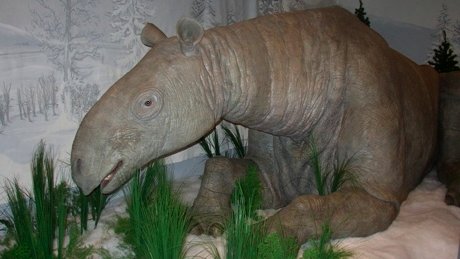
 This mammal is calledBaluchitherium (The Beast of Balochistan). So far the fossils of this mammal have only been found in Baluchistan and Central Asia.
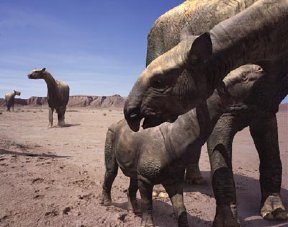 All in all it was a 5 year long on-and-off study. The French team was led by Professor Jean-Loup Welcomme of the Natural History Museum in Paris. While the first complete skeleton of Baluchitherium was dicscovered in 1999, it was as early as 1846 when first pieces of fossilized Baluchitherium were accidentally stumbled upon in Dera Bugti by a British Army officer who went by the name of Vickary.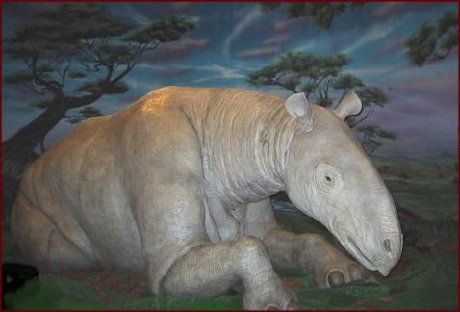
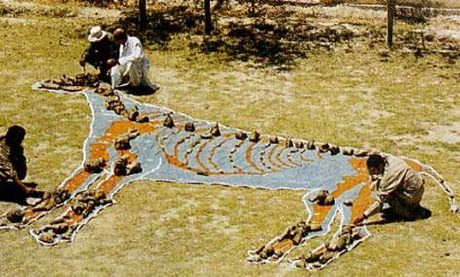
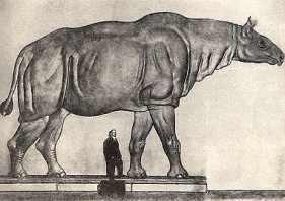 Eventhough Balochistan is now mostly a desert but since Baluchitherium would have needed as much astwo tonnes of fodder every day, the French team believes this area of Pakistan must have been heavily forested.
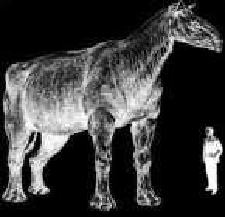 The latest news about Baluchitherium came last week when in early March 2008, more pieces of Baluchitherium have been excavated in Dera Bugti area. I read this update in Jang’s latest news feed but didn’t see the detailed news on it in the regular paper.