Discussing Pakistan’s unique transport has remained a favourite topic at ATP (see Rickshaw, Truck, Tram, Bus and all modes of transport together in a post).
Today I want to pose a question to our readership. What do you think is the most challenging transport ride you’ve taken in Pakistan? If you ask me then there is only one possible answer and that is the challenge of sitting and not slipping at the back seat of a tonga.
You see the tonga owners all across Pakistan, for some reason, put a vinyl/plastic back seat cover. The urdu word for this material is mome-jaama. Now most of the tongas in Pakistan travel at a tilted angle anywhere between 30 degrees and 60 degrees. This tilt angle is directly proportional to the weight of back seat passengers and inversely proportional to the weight of coachman. To get a better picture, see this forward slash that I am going to type ( / ). Now imagine sitting on the back seat of a tonga at such a tilt, with a plastic seat cover underneath and not slipping. pretty tricky - huh.
The situation is even more challenging for children whose feet do not reach the foot board. I’ve had first hand experience of facing this serious challenge many times during my tonga rides from Lahore station to Misri Shah or do-moria-pul or on the inclines of old city Lahore.
One has to grab on to anything on a tonga’s frame for one’s dear life but if you are sitting in the center of the seat then there is no other option but to grab on to other people’s clothes to avoid slipping.
rau meiN hai rakhsh-e-umr, kahaaN dekhiye thamayna hath baag par hai na paa hai rakaab meiN
As if this problem was not enough, imagine ladies holding small children in their laps and sitting on the back seat of a tonga.
I will refer our readers to the title photo of this post to appreciate this problem.
This situation is a 3-variable problem of dynamic motion. While the tonga moves forwards, the ladies keep slipping backwards and the babies in their laps also tend to slip backward but with a different acceleration. This is all because Newton once said that a=F/m where m is hugely different for mothers and babies. Therefore to over come Newtonian law and a Draconian seat, mothers have to be extra skilfull on a tonga.
If you think this is the end of a tonga’s back-seat dilemma then I will say three times in English: no, no and no and 3 more times in Urdu: na, na aur na. There is one more test reserved only for tonga’s back seat passengers. This happens when at a traffic light the tonga behind yours cannot stop in time (ghora bhi aakhir ko insaan hai - khataa ka putla hai - or atleast he is controlled by a human). In such cases the saliva foaming and smiling with green teeth face of a horse comes dangerously close to back seat passengers of front tonga. Imagine this situation in the graphics that I will type. It shows 3 tilting tongas and their horizontal horses. ( /horse3/horse2/horse1 ). Note how dangerously close horse 2 is to the back seat of tonga 1 and so on.
I’ve heard of real life situations where people in the back seat of a tonga ran away or screamed when the face of horse from the tonga behind them came too close.
This post is not an exaggeration. May be the tilt angle of a tonga ( / ) is a bit exaggerated but slipping on back seat of a tonga is very real and quite unique to this part of the world.
kis cheez ki kami hai khwaja teri gali meiNGhoRa teri gali maiN, nathia teri gali meiN
I’ve even read this problem in Urdu literature. I believe I read it in late Ashfaq Ahmed’s one of zaavia series books.
Do you have any experience to share from a tonga’s slippery slope?
Wednesday, February 24, 2010

Thursday, February 18, 2010
Pakistan's Gift to Britain
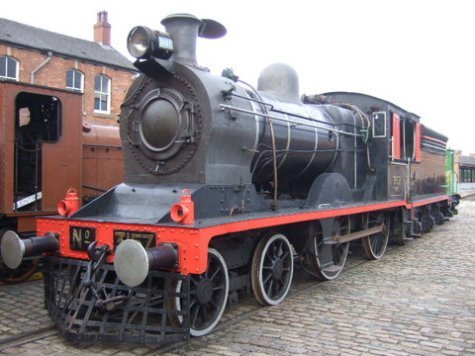
Three weeks ago I was going through my favourite past time. That is to frequent thelas (Carts) of old book sellers in Karachi and looking for deals on books. I couldn’t belive my luck when I found a book called’sifaarti moaarke’ (Diplomatic Battles) by Pakistan’s ex Diplomat to UK, Mr. Qutbuddin Aziz. People say never judge a book by its cover, but it was indeed the cover of this book which made me buy it. It showed a rehabilitated Steam Locomotive of Pakistan with a caption“Pakistan’s gift of a steam engine to UK in 1981 and the interesting story of this loco’s arrival in Manchester”.
After reading the book introduction on the cover I had no choice but to buy the book. I paid a princely sum of Rupees 85 (US $1) for this second hand book and brought it home.
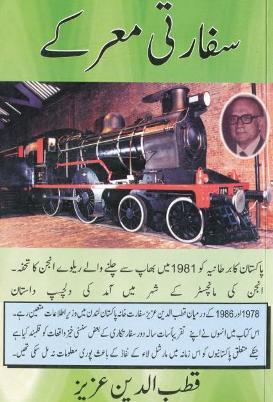 Image to the right shows the book cover.
In the following paragraphs I’ll try to narrate the story which Q. Aziz wrote in his book. He was secretary of information in Pakistan’s diplomatic mission to UK during 1978-1986.
In 1981 the director of Manchester Museum of Science and Industry, Dr. R.L. Hill came to the Embassy of Pakistan in London. His exact words to Q Aziz are hard to recall but basically he told him that:
Steam locomotives are fast becoming a thing of the past. People of Britain take lot of interest and pride in their preservation and consider it their national heritage. We’ve come to know that a steam locomotive which was built in 1911 at Vulcan Factory(near Manchester) is currently the property of Pakistan Railway. It is getting ready to be retired from service and will be sold as scrap metal after that. Can the Government of Pakistan give this locomotive as a gift to the museum? The museum will display this locomotive all year round and the new generation of Britain which is not familiar with Steam locomotives will learn about their glorious past.
Dr. Hill also told Q. Aziz that South Africa and India also have British made Steam locomotive but both countries want to keep these locos in their own countries. Since Pakistan is moving fast towards Dieselization therefore steam technology will soon become archaic there and Manchester Museum would like to preserve this steam locomotive for everyone’s benefit. Mr. Hill also offered to bring the locomotive to UK aboard a ship and sponsor its transportation.
While talking to the Q. Aziz, Dr. Hill gave more details of the steam locomotive as:
it was built in 1911 at Vulcan Factory and the same year it was shipped to Mumbai (then Bombay) where it remained in service with G.I.P Railway. The locomotive did great service duringWorld War I and II where it was used to move thousands of troops from one place to other. This locomotive had seen every nook and corner of India. In 1947, this locomotive was given to Pakistan Railway where it continued to serve the passengers for more than 30 years and was now on the verge of retirement. It was estimated that if sold as scrap metal, the locomotive would’ve fetched upto Rupees 500,000. If Government of Pakistan could donate it to the museum then it would be great for coming generations.
Pakistan’s Federal Secretary of Communications, Lt Gen Mujeeb-ur-Rehman was visiting London in 1981. Q. Aziz told him to ask Pakistani Government to give this locomotive to UK. This was the time when USSR had invaded Afghanistan and Pakistan badly needed support of USA, UK and other Western Countries. Margaret Thatcher was already against USSR’s invasion and at such time a donation like this to Manchester Museum could certainly create good will for Pakistan along with preserving the locomotive’s historical value.

The photo above shows how #3157 looked like before it was ready to be retired. Seen here at Moghalpura Workshops in 1981.
Few days later the then President of Pakistan, Gen Zia-ul-Haq asked Pakistan Railway Board to look into the merits of donating the loco to Manchester museum as well as to get its scrap value appraised. The appraised value came out to be around Rupees 500,000 and the Railway Board decided to donate the locomotive to Manchester Museum.
Embassy of Pakistan in UK in the mean time announced the decision of Government of Pakistan to donate the locomotive to Dr. Hill who thanked Pakistan on behalf of Manchester Museum. Sir Fredrick Bent who was the then President of Pakistan Society (UK) and a member of Parliament in UK called this a landmark decision in the relationship of UK and Pakistan. British press also gave due coverage to this announcement and several stories were carried out in the press. Embassy of Pakistan also issued an old photo of the loco to the press.
The locomotive was then sent to Moghalpura workshops in Lahore where it was rehabilitated including a new coat of paint. The embassy was told the locomotive was in running condition and as a test it was successfully driven on a long route in Baluchistan.
Dr. Hill told Q. Aziz that his museum was working with a shipping company called ‘P&O’ to transport the locomotive from Karachi to Liverpool when one day suddenly the company closed its service to Karachi.
Dr. Hill became very sad and came to Q.Aziz and told him the story. Few days later the then CEO of Pakistan National Shipping Corporation (PNSC) Rear Admiral Bhombhal came to London. In the meantime embassy people found out that possible freight of transporting the loco from Karachi to Liverpool via ship could cost as much as ten thousand pound sterlings. Q. Aziz talked to Bhombhal who told him that since this is a good cause, PNSC will bring the loco from Karachi to Liverpool free of charge. When President of Pakistan heard about this gesture of PNSC, he became happy and himself went to see the locomotive after its rehabilitation was completed at Moghalpura Workshops. A farewell party was arranged to see off the locomotive from Lahore. Black paint was done on with a coat of wax (polish) to make it look shiny.
The book claims that:
“The locomotive was then brought from Lahore to Karachi (a distance of 1220 km) on its own locomotion. Coal and Water were especially made available for the loco enroute.”
I am unable to verify this claim by any other source. Most likely the locomotive was dragged from Lahore to Karachi either as dead weight behind another loco or in ‘light steam’. This was probably done to avoid any untoward damage to the loco before it was to be sent to UK. One of my friends Nick Lera has told me in an email message that # 3157 definitely ran under its own steam into the Karachi docks and right up to the quay before embarkation. Therefore we can say for sure that the loco covered atleast some part of its long journey on its own power.
Big cranes at Karachi port lifted the locomotive and put it on the deck of a PNSC ship. Pegs were inserted on the deck and ropes were used to make sure engine does not move during sea journey’s turbulations. 3 weeks later, the ship arrived at the port of Liverpool. Dr. Hill was waiting for this arrival impatiently because he had told the Buckingham Palace about the locomotive’s arrival and he wanted to get an appointment with the queen after knowing the date of engine’s arrival at Manchester with some surity.
The PNSC ship docked at Liverpool in the evening and Dr. Hill called Q. Aziz to invite him to the port next day so he could also watch locomotive’s unloading from the ship. Q.Aziz wanted to go to the port too but next morning Dr. Hill called him again and asked not to come to Liverpool yet. He told Q. Aziz that British Customs had come to know that a large amount of narcotics (heroin) were hidden in the locomotive. Customs was therefore planning to inspect the whole engine with drug smelling canines at 10:00 a.m. and then decide on its future. Around 6 p.m Dr. Hill called Q. Aziz again and told him that Customs looked at every inch of the locomotive and no narcotics were found. Customs cooperated with the embassy and this news was not given to the press. Q. Aziz also didn’t tell this news to anyone - not even to the then President of Pakistan - because he thought it was probably done to malign Pakistani Government by some bad wisher. The news bacame public in 1989 with the publication of this book.
This locomotive then travelled by road on two loaders to Manchester. One loader was used for the engine and other for the tender. The locomotive was then parked in Manchester museum using an electromotive which pushed # 3157 to its permanent place in its new home.
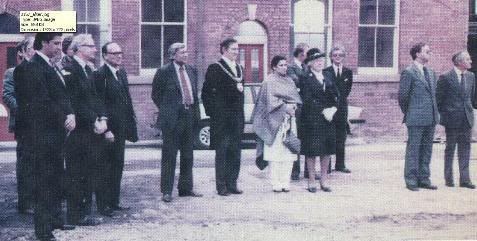
Dr. Hill was then given a date from the Queen about when she could come to Manchester and receive the locomotive on behalf of British people. The day finally arrived. Queen and Prince Philip came from the Royal family. Pakistan’s ambassador and PNSC’s CEO were also present. See the photo below from this occasion. News was carried on both TV and Radio. London Times also printed a large photo of the locomotive the next day.
The author here narrates an interesting anecdote:
During the reception Prince Philip asked Dr. Hill whether the engine was in working condition. At this question, Dr. Hill looked towards Q. Aziz and told Prince Philip that engine had arrived from Liverpool to Manchester on its own and is in working condition”.
This is one place in this article which creates some doubts to the mind with the Urdu words ‘apne bal-boote par’ which mean ‘on its own’ . The fact is that locomotive had come from Liverpool to Manchester by road and not on its own. Therefore I don’t know whether Dr. Hill used a metaphor for Prince Philip or the author has recalled the conversation wrong. The book was written 8 years after the event took place therefore recalling events and words does become doubtful - when it comes to details.
The author further writes that after hearing Dr. Hill’s reply, Prince Philip said:
“Yes, since our people built this engine therefore it is still working”.
To this Q. Aziz replied:
“Your excellency, please don’t forget that Pakistan has maintained the engine for all these years and has now given it to UK in running condition”
This locomotive is now 99 years old. Next year will be its centennary celebrations. It continues to be on display at Manchester Museum with a grandeur unmatched by its other colleagues.
Wednesday, February 17, 2010
What's this??? Guess!
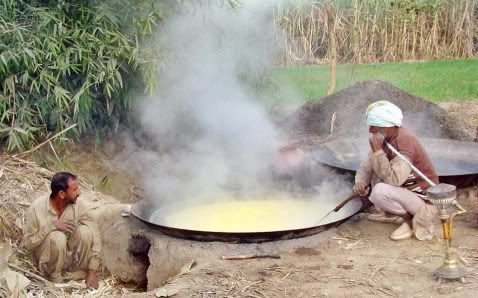
I am sure many of our readers will get it right away but for some’shehri baboos’ like me, it will be a challenge to figure out what’s cooking. I admit that I could not guess myself, until I read the caption that came with the original photo. Answer to this quiz will be revealed in comments below a little while later.
Monday, February 15, 2010
Paksitan's Oldest Stamps
Somewhere around class 6 I realized that I needed to have a hobby?
Playing cricket on the streets or reading Ishtiaq Ahmad novels were not considered real ‘hobbies’ in my peer group. Popular hobbies were: stamp collecting, coin collecting, paper plane making, collecting dinkie cars, or drawing transformers in your school notebooks.
Well, I chose stamp collecting to be my hobby for two simple reasons: (a) an aunt gave me a stamp collecting book as a birthday present, and (b) I realized I could start a collection right away by simply going through letters mailed to my family over the past few years.
I was a hobbyist for a long time. I collected hundreds of stamps and even learnt how to trade them with friends and pen-pals. Some of my favorite stamps came from the United States and Nicaragua. Some of the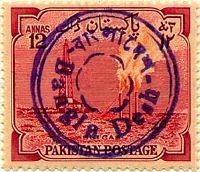 most boring were from the Middle East. But anyways, I wanted to write today about the early stamps of Pakistan. I will follow up with a post on the early currency notes from Pakistan, which happened to be my brother’s hobby.
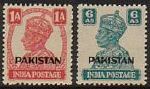
Pakistan started its journey on the 14th of August 1947. However, there was plenty of other things to worry about in managing a nascent independent country than its official stamps. So the first stamps of Pakistan were actually British Indian stamps overprinted with the word “Pakistan”. Shown here are the pictures of the 1 Ana and 6 Ana stamps. Would these qualify as Pakistan’s first stamps?
But this was not the only international aspect of the first stamps in Pakistan. According to Tahashi's essay:
When the British India was partitioned into India and Pakistan on August 1947, British Indian post offices in Dubai and Muscat were inherited by Pakistan and managed by Karachi GPO. These Pakistani post offices were closed on 1 April 1948. This chronology implies that “PAKISTAN” overprinted stamps were used in Dubai and Muscat only for 6 months from 1 Oct 1947 to 31 March 1948.
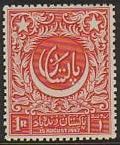 It wasn’t until July 1948, that the first set of entirely Pakistani stamps were printed. Shown is the picture of the first 1 Rupee stamp of Pakistan. The stamp has a beautiful floral pattern with thechand and stitara motif, and an Urdu inscription reading Pakistan Zindabad, i.e. Long Live Pakistan. Some would call this the first official stamp of Pakistan.
ATP has provided rare glimpses into the history of the State of Bahawalpur (e.g. here), and when it comes to stamps, there is some unique history to be shared once again. From 1947 onwards, and up until 1949, the State of Bahawalpur issued it own stamps. Again from Takashi's Essay:
The photo on the [left] shows a set of four stamps issued in 1949. These stamps were beautifully engraved and shows industrial symbols of Bahawalpur: irrigation barrage, wheat, cotton, and local bullock. About 60 Bahawalpur stamps were issued and all of them are in high quality, reflecting the hobby of the state’s ruler (he himself was an enthusiastic philatelist).
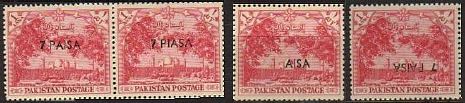
The next big change in stamps occured in 1961 when the country moved to decimal currency system. Gone were the anas, and thepaisas were in. Again there was a shortage of stamps and the new currency denomination was simply printed over the existing stamps. Interesting errors are found in the stamps from that era, and some of bloopers can be seen in the pictures below.
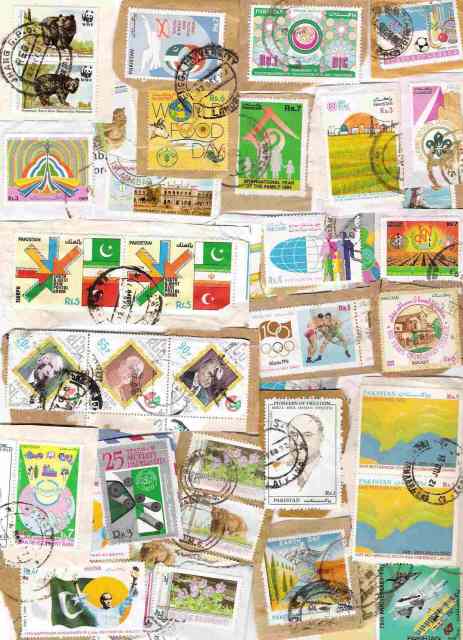
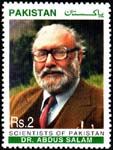 Since 1947, Pakistan has been printing stamps regularly, and according to one catalogue over 750 stamps were printed between 1947 and 1990. These stamps have been of various categories: service stamps (used by government agencies to mail material), regular stamps, and commemorative stamps.
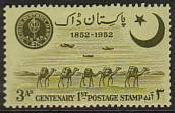 In 1952, the Pakistan Postal Service issued an interesting commemorative stamp on the 100th anniversary of the oldest stamp in Asia. The original was called the “Scinde Dak” and was used in Karachi and surrounding regions in Sind. The centenar stamp was for 3 anas and shows the camel caravans that were used to carry the early mail.
I don’t get as much postal mail as I used to in the past. But still, on Eid and other occasions, when I get the cards mailed to me I still take long look at the stamps before opening the envelope. Some habits never die.
Saturday, February 13, 2010
Little Masters..
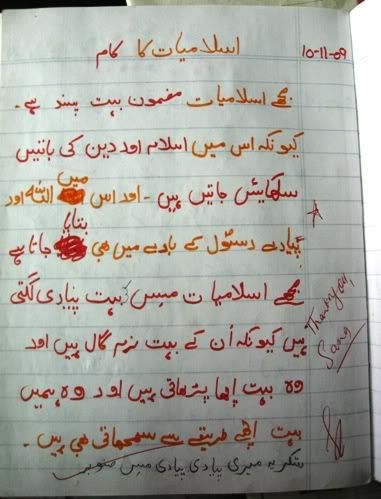 Few days ago my brother who is in class two, was ahowing me his school work. As I was going through his notebook I found following text on the first page. I started reading it and as I reached the bottom half of the page, it floored me with laughter. For our English readership: The first four lines of the text talk about the religion and the God but from 5th line onwards the text goes like this.
I like my Islamiat miss (lady teacher) very much because she has very soft cheeks and she teaches very well. She also make us understand the suject very well. Thank you my lovely lovely Miss Sanobar.
Miss Sanobar’s remarks can be read in red in the right hand column.
Tuesday, February 9, 2010
Pakistan The Great
 Editorials, blogs, newspapers, coffee house discussions, no matter where you turn to, people are screaming about their version of what’s wrong with Pakistan. Yes! It is indeed a country with thousands of problems, it is indeed a mess right now, 99.9% of the things are going bad, but, why don’t I see anybody talking about the 0.1% of goodness that we still see around us.
I am an average person whom you don’t have to listen to, but I would request a few minutes of your time while I express what is still good and commendable around me. If we don’t show gratitude towards whatever is still good, we will lose that pretty soon as well.
“The hardest arithmetic to master is that which enables us to count our blessings.”
- I am grateful to the people who clean the streets of Pakistan. I know that people criticize you incessantly but I have seen you work hard in scorching heat and I cannot thank you enough for keeping our city clean.
- I commend all the organizations that are genuinely working hard to provide free education. I have met people studying in these schools and getting opportunities they could only dream about.
- I am grateful to the volunteers who still direct traffic in parts of Pakistani cities wearing a jacket that says “I own Pakistan”. I don’t know which group or organization they belong to, but I think they are doing a wonderful job.
- I feel blessed that we still have elders around who are practically strangers to us but still dispense wisdom and kindness when we are in trouble.
- I want to thank the 90 year old lady I met, running an orphanage in Karachi. I also want to thank another old lady who walked miles to donate Re. 1 to that orphanage. That’s all she could afford.
- I want to thank the security forces and the police.
- I am thankful for the brief yet memorable moments following our recent sports achievements. Those moments brought with them unity, gratitude and celebration.
- I will forever be grateful to those school teachers who think teaching values is more important than teaching a generic syllabus. We might be able to pay you for your work but we can never pay you for the nobility of your profession.
- I want to thank those who still provide free food to people. No matter what motive you have, it always eliminates hunger and feeds poor.
- I know the roads in my city are broken and full of puddles, but I am happy that they take me to places I couldn’t go otherwise.
- I am grateful for people who build houses. I know they only want to fill their pockets but they still provide housing to people who would otherwise sleep on streets. I know cities where hundreds of thousands of people sleep on footpaths.
- The unity we demonstrated after the October 8th 2005 Earth Quake was extra ordinary. Hat’s off to the thousands of volunteers, contributors and well wishers who made us realize we still have a heart.
I am not a writer but I still hope you can see the sentiment behind my unstructured sentences and linguistic inadequacies. Eckhart said: “If the only prayer you said in your whole life was, “thank you,” that would suffice.”
What are you thankful for?
Saturday, February 6, 2010
Base of crimes..
 Violent crimes have been at historic up nationwide; they are rising sharply in all cities. The rise seems to have been set off by something more bewildering.
Imagine Lahore only ten years ago: It was a different city; socially cohesive, closely knit. Young children could go visiting neighbors or to nearby shopping centers to get groceries and other things but not now. People then knew each other personally and had strong social bounds; hence courtesies for each other.
Things started changing with an exponential increase in urbanization. Large number of outsiders started moving in Lahore to live and or work. Now even the immediate neighbors do not know each other and people act like total strangers. Garish housing societies have come up on all the open spaces inside the city and Lahore has expanded much beyond what used to be municipal boundaries. The crime rate has grown with mush faster speed than the city.
What are the apparent causes? Many experts say that crimes are a result of disintegrating familial and dwindling community values that are contributing in turning young people into violent criminals.
Due to the growing demand for educated workforce and skilled labor, an employment base that used to provide jobs for those without a school certificate has shrunk considerably. This situation has resulted in a general lack of hope. “If one does not have skills, training, and when socio economic situation looks desperate, does that young man really have hope? I think that ties into the anger,” says a sociologist Dr. Muhammad Anwar, “This anger seem to be translating in to crimes, petty in the beginning that leads to more heinous ones at later stages.” This is the reasons that the criminals mostly are in their mid teens to mid-20’s.
 One finds unskilled workers sitting in a linear fashion with their tools - mountains of paint brushes, piles of colour scheme cards, number of empty paint cans, digging paraphernalia and or hammers of different kind (who said unskilled labour) - along any city roads and squares waiting for a day’s job. They all come from suburbs to earn their livings. What options do they have when they do not get the job for the day and they have to go back home to family that is to b fed, is the question. They not only lose hope but may get frustrated that may lead them to resort to unfair means, what ever is possible for them.
Similarly, the army of maids and home servants who come from nearby villages and towns when dazzled by urban glamour are incited to commit to petty crimes and thefts.
Not only unskilled and uneducated segment, even degree holders find it difficult to get their first job after graduation because traditionally the job market in slow economy of Pakistan has always been tight. Which is why one reads reports of crimes (from purse and mobile phone snatching to car lifting to burglaries and murders) being committed by people from effluent class and living in posh localities of Lahore? Though generally, the poorer neighborhoods are considered to be the hubs for frequent criminal happenings. Let me hasten to add, this does not imply that there are no crimes in posh localities like Defense Society, or Gulberg or the criminals living in these localities can not commit crime around Railway Station or Badami Bagh Bus Terminal or Lakshmi or Bhatti gate.
Besides hopelessness, crimes are attributed to greed, to an evil nature, to poor parenting, to television, to movies, to the Internet, to whatever seems to be popular and not in accord with our old societal value system. These and many other are the reasons that we find crime rate rising on an alarming rate.
Crime statistics, like any other officially reported data, cannot be considered reliable. In the past decade, Lahore has been awash with guns. Empirical evidences tell that Kalashnikov and other automatic weapons have become ubiquitous in Lahore, city called cultural capital of Pakistan. This fact makes the crime quick and fast, much faster than law enforcing agencies to track.
Criminality extends into all levels of society and it cannot be restricted to the largely undefined boundaries of Lahore. Given the fast and efficient communication means (roads network, mobile phones, more transport), it has been observed that criminals sometime come from suburbs, make their day and go back uncaught. Those who study crime debate say, “Criminals may be from anywhere but all crime is local, of course, and each city has its underlying causes.”
Analyzing crime is an absorbing exercise. It throws up new facets of crime and new ideas on how to cope with them. The real tragedy, however, is that there is hardly a national debate on crime, like the one seen in the developed world; where the crime are more. “Unless crime hits hard personally, I am not concerned,” is the worst attitude that is exhibited some time.
The only long term solution to put an end to crimes and make our society more civilized is to end hopelessness. How to create hope in the people and tolerance in our society are the real issues that need to be addressed. And this can happen when every one is conscious and does what ever is possible.
The solution is not with police or any other law enforcing agencies. “The problem is much deeper and the solution has to be long term. Combating crime firmly and honestly is one thing. Provision of education, heath and other social securities, fair play in practices and procedure are some other starting points. Collectively, we should act responsibly and are some factors to start if we have to combat crime,” Dr. Pirzada Inam Karim.
Wednesday, February 3, 2010
Cricket mandi
We seem to be on a roll with cricket related posts (here and here andhere). So, here is one with more pleasant associations.
See if you can count how many cricket matches are simultaneously going on at GTC Ground Hyderabad on the New Year’s Day - 2010 (please click on the photo below to get a larger and better viewable image).

I was able to count 15. Any challengers?
Tuesday, February 2, 2010
What has Afridi Done with tha ball??
Seems like everyone who should have been a role model is becoming a symbol of shame.
The most prominent “aalim” in the country is spreading jahalat. The President of the Republic is shouting obscenities. And our endeared sportsman is biting cricket balls to cheat his way to victory (which still alludes him). And all of this is just what we have been talking about the last three days!
Yes, that is exactly what he did. With Pakistan on a losing streak, having lost the first four one-day games and well on its way to losing the fifth, Shahid Afridi took the cricket ball and actually started biting it, even as the television camera was squarely focused on him doing so. And why would Shahid Afridi indulge in this illegal, and rather disgusting, form of ball tampering?
Here is his response, in his own words:
I shouldn’t have done it. It just happened. I was trying to help my bowlers and win a match, one match… There is no team in the world that doesn’t tamper with the ball. My methods were wrong. I am embarrassed, I shouldn’t have done it. I just wanted to win us a game but this was the wrong way to do it.
Is it just me or is he actually missing the point?
Read the statement again: “There is no team in the world that doesn’t tamper with the ball. My methods were wrong.”
What is he saying? That tampering is OK but his “methods” were wrong? Pray tell us, Sir, what would be the “right” method for tampering a cricket ball!
That Shahid Afridi, a cricketer so loved by the nation including at this blog, should do this makes the pain even more hurtful. Shahid Afridi has been slapped with a punishment of having to miss two 20-20 games. But, as blogger Teeth Maestro (where I first saw this video) argues, that is not enough and the Pakistan Cricket Board should itself look into the matter and provide sterner punishment.
Politics, media, and now sports. Let us please have some repercussions to bad behavior, somewhere!
Aamer Liaquat Hussain: Explaining Why Pakistan is Losing!

Ex-MNA and fake degree holder Aamer Liaquat Hussain has taken even his own jahalat to new heights when during his‘Aalim On Line’ show on Geo TV today (January 29, 2010) he revealed the real reasons behind the poor performance of Pakistan’s cricket team!
According to GEO TV’s resident Jaahil Aalim the Pakistan team had started to perform poorly because its players are now wearing cricket shoes with green colored soles!
Yes, you heard it right. Its all in the shoes. Or, actually, in the soles!
Hold your astonishment, folks, just for a bit.
As the Jahil Aalim explains, green is the colour of Pakistan and of Islam and this color being rubbed on the ground is a derogatory act. Hence the divine retribution on the Pakistan cricket team!
It is difficult to believe that some one who professes to be a “modern religious scholar,” in this time and age would be allowed to deliver such superstitious sermons on a leading TV channel. One wonders how Geo TV can tolerate “aalims” of such questionable credentials as they further distract and confuse an already uneducated nation with yet more ignorance.
Importantly, should the TV channels not be concerned that such incorrect, misleading and damaging information is being propagated by them and in their name? Should the channel itself not be held accountable for such jahalat?
Monday, February 1, 2010
Computers Traveling...
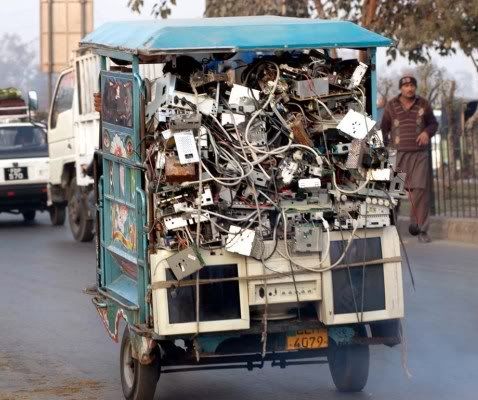
What comes to your mind when you see this?
I immediately think of this sheyr:
"sab thaath para reh jaawe ga
jab laad chale ga banjaara"
Tuesday, January 19, 2010
Golf in Pakistan
If there ever was a place on the planet where you could play golf like a lord and pay like a knave, it would be Pakistan.
(Royal Palm Golf Club, Lahore, Pakistan)
Pakistan is the most well kept secret golfing destination as it has some of the most spectacular courses that are open year round. The alluvial soil of the Punjab plains coupled with the Himalayan backdrop provides a natural ecosystem for an interesting golf course layout. Pakistanis are also naturally talented as golfers as they on the average tend to have very good fine motor control and an Asian mindset that marries competitiveness with a balanced inner calm. The fine motor control and good hand eye coordination has been shown by Pakistani athletes in the fields of squash, field hockey, cricket(yikes) and badminton.
Golf came to Pakistan generally as a result of foreign presence. My first experience on a golf course was at the Peshawar golf course that was built on a dried lake bed. The first nine holes are one of the greenest in Pakistan. Pakistan Air Force Commanders got the golf bug and provided the support to make golf one of the sports they adopted along with squash. My parents got into the game at Risalpur Air Force Base in the early 60s. An old World War II base was converted into a the golf course. The runway became the fairway for a couple of holes. The old air traffic control tower was converted into the club house.
Pakistani golf courses tend to have indigenous grass that is is quite hardy and can withstand hot temperatures. The blades tend to grow horizontally and don’t need much of watering. Most of the courses are only sparsely watered, and as a result have a harder surface when compared to those in the US. As a result of grass type and limited watering, the golf swing that works is a shallower one that does not require a divot. Picking the ball clean and letting it run after it drops is the typical way most Pakistanis learn to play.
Trapping the ball is a challenge due to the harder surface and therefore difficult to spin the ball. The greens tend to be well maintained but are generally slower than those in the US. Most Pakistani golf courses are private and tend to fall into three categories.
First category are the old golf courses like Rawal Pindi, Lahore Gymkhana, Peshawar Golf Course, Islamabad Golf Course etc. They are generally well maintained and have old trees and a lot of character. The Rawal Pindi Golf course is the oldest golf course. It was completed in 1926. The facility was initially developed as a nine-hole course. After several phases of development, it is now a 27-hole course. The clubhouse is perched on a hill, from where there is a panoramic view of the twin cities of Islamabad and Rawalpindi. The foothills of Himalayas provide the backdrop.
The second category are courses maintained by Pakistani Armed Forces and government entities like Railways etc. They tend to be relatively new and not open to general membership. Their quality varies from place to place. If you can get in , the cost of playing is minimal. The third category are the premier golf courses like Royal Palm in Lahore and Arabian Sea Country Club in Karachi. They are world class courses that have manicured fairways and greens; and are from a Pakistani perspective quite costly to join and play. Pakistan Open joined the Asian PGA tour at Arabian Sea Course in 2006.
Then there are some golf courses in exotic places like Bhurban in the Himalayas. It is a nine hole course adjacent to a luxury hotel situated in and around a saddle hill between to mountains. One par three hole that requires extreme focus as the there is a deep ravine between the tee and the green with swirling winds.
On the average Pakistanis tend to play regularly. The caddies are common, as they are inexpensive to get. Not many courses have golf carts. This actually results in less wear and tear of the fairways given the heavy use they get, even though most are private courses. Many of the caddies are scratch players and can guide visitors like me about the local conditions. In many courses there are even “agay walaas”. They are the ball boys walking ahead to keep an eye on an errant ball.
There are many reasons inhibiting Pakistani players fromreaching the top in world golf:
There are no structured and quality golf schools.
Because most courses are private, the cost of joining is prohibitive from the Pakistani perspective.
Those who can overcome these hurdles are mostly constrained to playing in conditions that are relatively tame from the world standard.
The length of the courses tend to be on the shorter side.
The Himalayas create such barrier to winds that the South Asian sub continent does not have windy playing conditions that are common elsewhere.
The golf courses tend not to have elevation changes of contoured fairways with sloping lies, as that would be difficult to irrigate and maintain in the hot season.
These relatively tame conditions don’t challenge Pakistani players to prepare for much tougher conditions when they go abroad.
To get a feel for what comparable golf outings would cost in Pakistan and US, let us compare Rawal Pindi Golf Club and Royal Palm of Lahore with Stow Acres North Course in Massachusetts USA:
At the semi-private Rawalpindi Golf Club the Green Fees are the equivalent of US$4 and the Caddy Fee is US$3.
At the private Royal Palm in Lahore, the Green Fees are US$25 (as guest) and Caddy Fee is US$3.
At the public Stow Acres in USA the Green Fees are US$60 and the Cart Fee is US$18.
As it turns out Pakistani industry produces many golf supplies leveraging their textile and leather base. Pakistani T-shirts, caps, towels, trousers, gloves, bags and head covers are sold world wide under different brand names.
The number of golf courses are on the increase with the increasing middle class. Most of the new golf courses are being built with the higher end housing developments. There needs to be a concerted effort to create public courses, as this would allow the public to play golf. This would provide a healthy outlet where not many currently exist. Golf has now also been included in Olympics and offers amateurs a chance for fame and fortune.
(Royal Palm Golf Club, Lahore, Pakistan)
Pakistan is the most well kept secret golfing destination as it has some of the most spectacular courses that are open year round. The alluvial soil of the Punjab plains coupled with the Himalayan backdrop provides a natural ecosystem for an interesting golf course layout. Pakistanis are also naturally talented as golfers as they on the average tend to have very good fine motor control and an Asian mindset that marries competitiveness with a balanced inner calm. The fine motor control and good hand eye coordination has been shown by Pakistani athletes in the fields of squash, field hockey, cricket(yikes) and badminton.
Golf came to Pakistan generally as a result of foreign presence. My first experience on a golf course was at the Peshawar golf course that was built on a dried lake bed. The first nine holes are one of the greenest in Pakistan. Pakistan Air Force Commanders got the golf bug and provided the support to make golf one of the sports they adopted along with squash. My parents got into the game at Risalpur Air Force Base in the early 60s. An old World War II base was converted into a the golf course. The runway became the fairway for a couple of holes. The old air traffic control tower was converted into the club house.
Pakistani golf courses tend to have indigenous grass that is is quite hardy and can withstand hot temperatures. The blades tend to grow horizontally and don’t need much of watering. Most of the courses are only sparsely watered, and as a result have a harder surface when compared to those in the US. As a result of grass type and limited watering, the golf swing that works is a shallower one that does not require a divot. Picking the ball clean and letting it run after it drops is the typical way most Pakistanis learn to play.
Trapping the ball is a challenge due to the harder surface and therefore difficult to spin the ball. The greens tend to be well maintained but are generally slower than those in the US. Most Pakistani golf courses are private and tend to fall into three categories.
First category are the old golf courses like Rawal Pindi, Lahore Gymkhana, Peshawar Golf Course, Islamabad Golf Course etc. They are generally well maintained and have old trees and a lot of character. The Rawal Pindi Golf course is the oldest golf course. It was completed in 1926. The facility was initially developed as a nine-hole course. After several phases of development, it is now a 27-hole course. The clubhouse is perched on a hill, from where there is a panoramic view of the twin cities of Islamabad and Rawalpindi. The foothills of Himalayas provide the backdrop.
The second category are courses maintained by Pakistani Armed Forces and government entities like Railways etc. They tend to be relatively new and not open to general membership. Their quality varies from place to place. If you can get in , the cost of playing is minimal. The third category are the premier golf courses like Royal Palm in Lahore and Arabian Sea Country Club in Karachi. They are world class courses that have manicured fairways and greens; and are from a Pakistani perspective quite costly to join and play. Pakistan Open joined the Asian PGA tour at Arabian Sea Course in 2006.
Then there are some golf courses in exotic places like Bhurban in the Himalayas. It is a nine hole course adjacent to a luxury hotel situated in and around a saddle hill between to mountains. One par three hole that requires extreme focus as the there is a deep ravine between the tee and the green with swirling winds.
On the average Pakistanis tend to play regularly. The caddies are common, as they are inexpensive to get. Not many courses have golf carts. This actually results in less wear and tear of the fairways given the heavy use they get, even though most are private courses. Many of the caddies are scratch players and can guide visitors like me about the local conditions. In many courses there are even “agay walaas”. They are the ball boys walking ahead to keep an eye on an errant ball.
There are many reasons inhibiting Pakistani players fromreaching the top in world golf:
There are no structured and quality golf schools.
Because most courses are private, the cost of joining is prohibitive from the Pakistani perspective.
Those who can overcome these hurdles are mostly constrained to playing in conditions that are relatively tame from the world standard.
The length of the courses tend to be on the shorter side.
The Himalayas create such barrier to winds that the South Asian sub continent does not have windy playing conditions that are common elsewhere.
The golf courses tend not to have elevation changes of contoured fairways with sloping lies, as that would be difficult to irrigate and maintain in the hot season.
These relatively tame conditions don’t challenge Pakistani players to prepare for much tougher conditions when they go abroad.
To get a feel for what comparable golf outings would cost in Pakistan and US, let us compare Rawal Pindi Golf Club and Royal Palm of Lahore with Stow Acres North Course in Massachusetts USA:
At the semi-private Rawalpindi Golf Club the Green Fees are the equivalent of US$4 and the Caddy Fee is US$3.
At the private Royal Palm in Lahore, the Green Fees are US$25 (as guest) and Caddy Fee is US$3.
At the public Stow Acres in USA the Green Fees are US$60 and the Cart Fee is US$18.
As it turns out Pakistani industry produces many golf supplies leveraging their textile and leather base. Pakistani T-shirts, caps, towels, trousers, gloves, bags and head covers are sold world wide under different brand names.
The number of golf courses are on the increase with the increasing middle class. Most of the new golf courses are being built with the higher end housing developments. There needs to be a concerted effort to create public courses, as this would allow the public to play golf. This would provide a healthy outlet where not many currently exist. Golf has now also been included in Olympics and offers amateurs a chance for fame and fortune.
Sunday, January 10, 2010
Greatest Animal Ever found on Earth
World’s largest mammal that ever walked the face of the earth used to live in Pakistan’s Baluchistan province. Yes it is true.
 This mammal is calledBaluchitherium (The Beast of Balochistan). So far the fossils of this mammal have only been found in Baluchistan and Central Asia.
In 1999, a team of FrenchPalaentologists discovered the complete skeleton of this giant mammal in Dera Bugti Hills of Pakistan. The find came as the result of a 5 month long expedition by the French Team in the Balochistan desert.
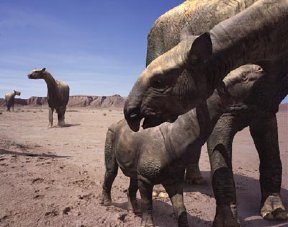 All in all it was a 5 year long on-and-off study. The French team was led by Professor Jean-Loup Welcomme of the Natural History Museum in Paris. While the first complete skeleton of Baluchitherium was dicscovered in 1999, it was as early as 1846 when first pieces of fossilized Baluchitherium were accidentally stumbled upon in Dera Bugti by a British Army officer who went by the name of Vickary.
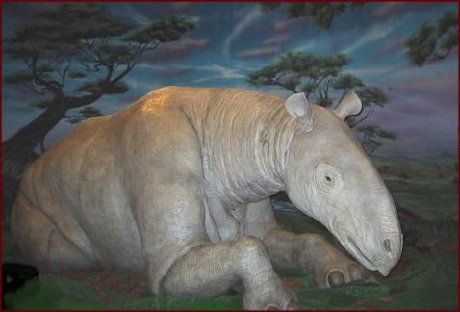
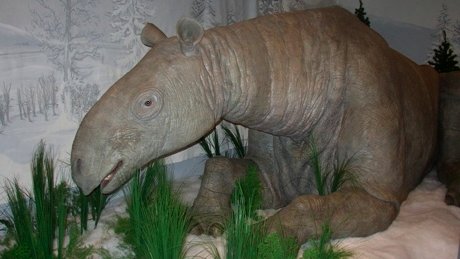
Following photo is a replica of Baluchitherium created for a museum in western hemisphere.
According to a BBC news report of May 10, 1999:
Baluchitherium is an extinct rhinoceros that lived during the Tertiary Period about 20 to 30 million years ago. With its long neck and legs, it was thought to feed high up in the trees. However, unlike the modern rhinoceros, the animal had no horn.
It had an estimated shoulder height of nearly 18 ft (5.5 m), a length of upto 28 feet (from nose to rump) and a weight of about 10 to 15 tons. The head was four feet long, sitting on top of a six feet long neck. This beast had poor eyesight, but made up for this with keen hearing and smell. Baluchitherium is classified in the phylum Chordata, subphylum Vertebrata, class Mammalia, order Perissodactyla, family Rhinocerotidae.
Following photo shows the French team and their Pakistani helpers recreating the skeleton of a Baluchitherium
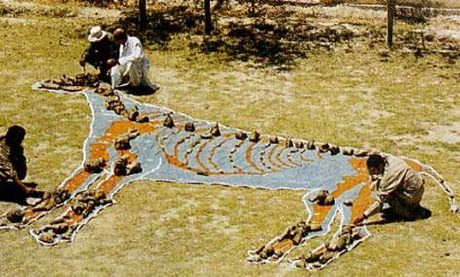
BBC News report further says that:
Although fossil remains of Baluchitherium have been discovered before, a near-complete skeleton has always evaded palaeontologists. The fact that the Baluchitherium was able to live in Baluchistan is giving scientists clues about the climate in the area millions of years ago.
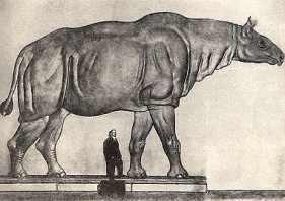 Eventhough Balochistan is now mostly a desert but since Baluchitherium would have needed as much astwo tonnes of fodder every day, the French team believes this area of Pakistan must have been heavily forested.
It is said that the Baluchitherium was a very defensive animal, and attacked any animal that was nearby. This beast tried to charge and trample foes with its front feet.
In an article written few years ago at www.thehotspotline.com blogger Ali Khan writes:
At a recent function organised by thePakistan Embassy in Paris which saw the launch of the Pak-France cultural forum,professor Welcomme delivered a lecture on his recent find. He also thanked the Nawab of bugti,the Bugti peopleand the University of Balochistan for extending all assistance to the French team. The Nawab of Bugti convinced other tribes to allow the team to work in the area and also provided material and technical assistance to Professor Welcomme’s team.
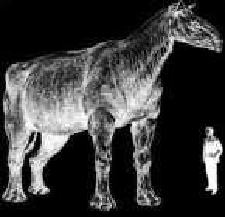 The latest news about Baluchitherium came last week when in early March 2008, more pieces of Baluchitherium have been excavated in Dera Bugti area. I read this update in Jang’s latest news feed but didn’t see the detailed news on it in the regular paper.
Is There A Baluchitherium Museum in Pakistan?
The short answer in NO.
But then I am not familiar either with what has been done at Government level to help finding and preserving Baluchitherium fossils. A National museum displaying some fossils of this mammal who roamed the land of Pakistan before us is the need of the hour. Does any of our readers know about any effort in this regard? If we come to know of any effort, we’ll update this paragraph here with the new information.
Baluchitherium Trivia:
1. Baluchitherium is a Van Halen instrumental from their 10th studio album, Balance (album).
2. Baluchitherium is also the name of a monster appearing in the computer game NetHack.
Sunday, January 3, 2010
Islamabad: The Beautiful
I returned to Islamabad recently, after a long absence, and was able to look at the city, once again, with a tourist’s eye. Before I get used to it and start taking everything as given, I thought, I should put down my impressions about the city: the good, the bad and the ugly.
First, the good. (The bad and the ugly will come in subsequent posts).
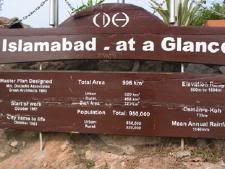

For those not familiar with Islamabad, when the city was built, in the early 60s, its various localities, or sectors as they are called, were given meaningful and interesting names like Mehran, Shalimar, Ramna etc., each name from a different province of Pakistan. For some inexplicable reasons, these names went out of use and were replaced by impersonal, and rather bureaucratic, names like E, F, G, H and I, which are further divided into 1, 2, 3 and so on. That is why you hear of E -7, F-6, F-7 or G-6, G7, G8, etc. I think it was Khalid Hasan who once said that theaddresses in Islamabad sounded like computer commands. How true!
E and F sectors are closest to the Margalla hills and therefore considered more “prestigious” while I sector is farthest from the hills and closer to Rawalpindi. There is a running joke in Islamabad according to which E sector is for the Elite, F is for First class citizens, G for General public, and I for Idiots who think they live in Islamabad but, in fact, they live in Rawalpindi. Obviously, it is one of those classist jokes that are found in most cities all over the world.
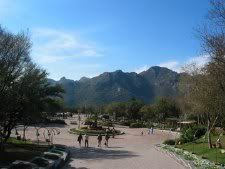
I have also heard the comment that Islamabad is a city without soul (whatever that means). Also, that it does not have history, architecture, and culture like Lahore and does not have the quick pulse and energy like Karachi. Probably all this is true. ButIslamabad has something that more than makes up for all such deficiencies. It has geography! Geography that is difficult to match by any other city of Pakistan or, for that matter, by most capitals of the world.
By geography I don’t mean elevation above the sea level, which in Islamabad’s case, incidentally, is a healthy 1700 feet. Nor am I talking of its latitude, which is 330 something - same as Atlanta, Georgia or Long Beach, California. It is Islamabad’s proximity to the Margalla hills that makes it a unique and a beautiful city. The city is so close to the hills that, on clear days, it seems as if you could touch them. They provide such a spectacular backdrop! Not only that, the hills also provide the numerous wooded trails for trekking and picnic spots. Plus, and this is a big plus, because of the hills, its elevation and latitude, the city has a cool, crisp and comfortable climate for 6 months of the year, and guaranteed clear blue skies for 5 days a week - on average, that is.
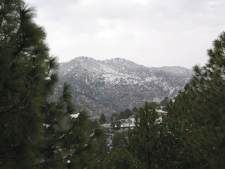
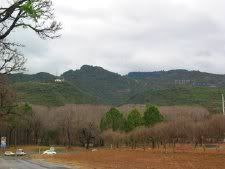
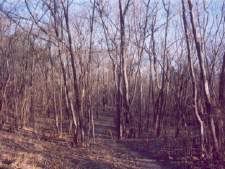
And, as if for embellishment, the Margalla hills occasionally wear a light coat of snow, some say every 7 years. The last time it snowed on the hills was in 2004. It looked spectacular and lasted long enough for me to drive to Pir Sohawa (25 minutes) and take a few pictures. And yes, unlike Karachi or Lahore, the city never gets swamped after rain even though it rains pretty heavily at times (45 inches annually).
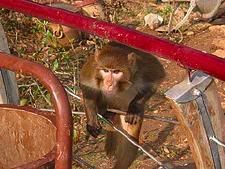
The hills are also a haunt for wildlife. It’s not uncommon to see monkeys coming out of the woods in the morning, crossing the Hillside Street in sector E-7, and sometime even jumping over the boundary walls of the houses in search of food. At night wild boars and jackals freely roam the wooded areas of the city scavenging for food. It makes Islamabad one of the few capitals of the world, if not the only one, where humans and wildlife coexist peacefully.
By Pakistani standards, Islamabad has excellent infrastructure - good roads, dependable electricity and telephone service. Above all, it is green, clean and free of the chaos seen in many of the Pakistani cities.
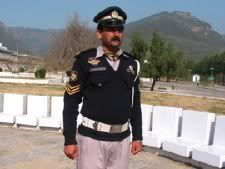
Talking of chaos, Islamabad has got itself new traffic police, which looks good - and is good. Unlike its sleazy and sloppy predecessors, the new police are serious, professional and polite. And they seem to manage the traffic pretty well. (I hope it stays that way).
Islamabad does not have shopping malls or large department stores — (yet!). It has interesting markets or bazaars in each sector, which resemble more like the old Middle Eastern souks. They are convenient and can be fun to visit, particularly in winters in the evening. The young Afghan boys frying potato chips (French fries), roasting peanuts or popcorns or preparing tikka kebabs in their tiny stalls or selling beads and trinkets on pushcarts in front of IT stores and video shops present a delightful mixture of old and new. The bookstores sell an amazing variety of books, ranging from Barack Obama’s new book The Audacity of Hope to Reading Lolita in Tehran to Behishti Zewar by Maulana Ashraf Thanvi.
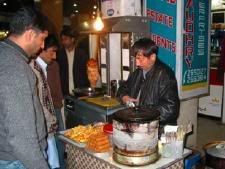
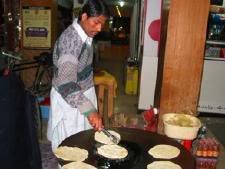
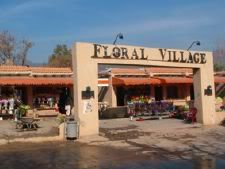

The purpose-built flower markets in sectors F-6 and F-7 are not only convenient but delightful places to visit. And they are not expensive. A stem of gladiolas costs only 10-12 rupees as opposed to 2 to 3 dollars in New York. But if you betray an “Amreeka-palutt” demeanor you might have to pay more.
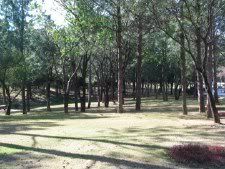
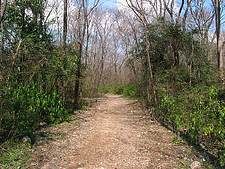
One of the greatest pleasures of living in Islamabad, that is, if you love outdoors and nature, is being able to go trekking in the Margallas. There are numerous trails leading to different peaks. Walking through the woods, especially in spring or early summer, and listening to the silence of the forest, broken only by bird sounds or an occasional rustle in the bushes caused by a surprised fox, can be an intoxicating experience. Wildfragrance of acacia, pine trees and sanatha shrubs pervades the air. I tell my friends that you could get a “high” on forest fragrance. Some jokingly suggest that the “high” I am talking about probably comes from the marijuana that grows wild and in abundance in the woods of Islamabad.
There is even a purpose-built and dedicated biking track going through a wooded area. But I have not seen many people biking on it. I guess there are certain things “self-respecting” Pakistanis won’t do. Biking is one of them. (Carrying anything heavier or larger than a briefcase is another.) It’s a cultural thing, I guess.
Another fun place to visit is Daman-e-Koh, a picnic spot at a height of 2,400 feet above sea level, but only 10 to 15 minutes drive from the city. Daman-e-Koh was always there with its white dome visible from everywhere in the city. The dome belonged to, and still does, a restaurant that served indifferent food. But recently the place has been transformed, thanks to the Capital Development Authority (CDA), into a delightful picnic spot, with a nicely landscaped park furnished with plenty of benches, paved paths, and decent and fairly clean public toilets (something uncommon in Pakistan) and a generous car park.
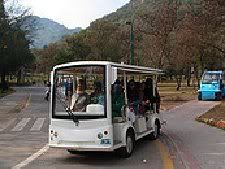
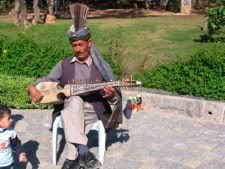
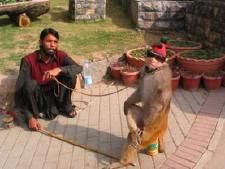
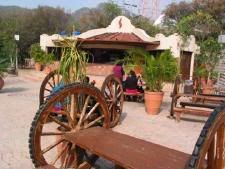
For amusement, you have golf carts that take picnickers for a short ride around the park. You also have the usual Bandar walla, his monkey in a cap greeting the visitors. Also, there is (this is unusual) a Pathan musician in his flamboyant kulla serenading the visitors with his rubab (a string instrument). People seemed to be more attracted by his presence than by his music.
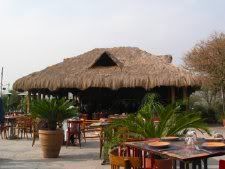
Instead of one restaurant, Daman-e-Koh now has three: an upscale restaurant named Café Lazeez, the old domed restaurant now improved and moderately priced, and a fast-food restaurant. Cafe Lazeez is built as a thatched hut with a large open terrace that has a fabulous view of Islamabad, the Rawal Lake and the surrounding mountains. Eating here, at this height, is somewhat like eating in the restaurant on Eiffel tower, in Paris. The difference is that tikkas and sheesh kebabs (reshmi kebabs, as they call them) at Cafe Lazeez are out of this world. Not being a great meat eater myself, I ordered the only two vegetarian dishes on the menu that day: paneer palik and masoor ki daal, served with fresh rotis from a tandoor. I cannot wait to go back there again. The bill for two persons? Rupees 600 including tips! Only US 10 dollars! The lack of a glass of wine that you would get on Eiffel Tower is made up by the incomparable desi food and, as I said before, the forest fragrance!
Subscribe to:
Comments (Atom)